|
|
|
|
|
|
|
|
|
Back
|
|
Tooth decay
|
|
Tooth decay describes the condition wherein the tooth breaks down leading to the
formation of a cavity. It starts with a hole/opening in the enamel. If this is not
treated, it progressively reaches the deeper sections of the tooth, where the pulp
and the nerves are causing the tooth to become sensitive to a variety of stimuli,
a variety of gum problems such as inflammation and swelling, pain and ultimately
tooth loss.
Tooth decay is a common dental ailment that may occur at any time or age. However,
since the onset of tooth decay is strongly related to the unregulated consumption
of sweet foods and beverages; it tends to affect the young and adolescents more
than any other age. One form of tooth decay occurs in nursing infants and is referred
to as nursing caries or baby bottle tooth decay. The milk is retained in the mouth
as the child falls asleep with the bottle. This milk is broken down by the germs
to form harsh acids which lead to the formation of a tooth cavity.
Causes of tooth decay
Irregular and improper brushing, not flossing between teeth, not rinsing with water
or mouthwash after meals speeds up the process of tooth decay. Periodic snacking
on aerated drinks, jam, marmalade, even potato chips can lead to the formation of
acidic by- products which damage the surface of the tooth enamel. This is the reason
why most young children adolescents suffer from tooth decay. Tooth decay might develop
from bad and worn dental fillings.
Stages of decay
Demineralization :
Demineralization is the earliest stage of tooth decay. It's called demineralization
because, during this part of the process, the tooth enamel loses the minerals that
make up its structure. The demineralization process starts with plaque. The bacteria
in plaque that cause demineralization survive by digesting the foods you eat, specifically
high- sugar and high- carbohydrate foods that can be broken down into simple sugars.
When bacteria feed on these sugars, they produce acid. The acid causes demineralization
by dissolving the minerals in tooth enamel. Sometimes you can see demineralization
as small white or brown spots on the teeth.
Cavity Formation :
Is an irreversible infection usually bacterial in origin that causes demineralization
of the hard tissues (enamel, dentin and cementum) and destruction of the organic
matter of the tooth, usually by production of acid by hydrolysis of the food debris
accumulated on the tooth surface.
Pulpitis:
Tooth decay reaches the pulp (nerve) of the tooth gets inflamed when exposed to
bacteria and irritating food particles. This condition is called Pulpitis, it causes
pain and pressure in the tooth.
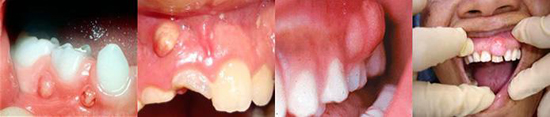
Abscess :
Symptoms
The most common symptom of a decayed tooth is a severe toothache. This is due to
the inflamed, infected area pressing on the nerve and root of the tooth. In many
cases, the root can die as a result of the infection and the pain may subside. However,
this does not mean that the infection is gone. It can stay active and continue to
destroy gum tissue and spread to the bone where it can do further damage, potentially
resulting in tooth loss. Other symptoms you may notice include gum inflammation/swelling,
tenderness with touch, pus drainage or open sore in mouth, breath odour, sensitivity
to hot or cold, shooting or throbbing pain when chewing, pits or holes may also
be visible in the teeth, swelling in upper or lower jaw, redness of mouth or face,
swollen neck glands, nausea and fever.
Progression of tooth abscess
 Treatment If you have developed black or brown spots of decay on your teeth either
in the fissures or on the smooth surfaces and it is associated with discomfort and
/or sensitivity to hot and cool and /or pain, it is likely that you have tooth decay.
Your dentist will evaluate your tooth and based on his clinical and radiographic
findings or by means of latest technologies to detect cavities that include fibre
optic light, dye penetration, electrical current and laser energy treat your teeth
as following:
-
When decay is limited to enamel:
Treatment at this initial stage is preventive in nature because it will stop the
decay process from extending to deeper areas of the tooth. All that is necessary
is a simple filling. It is usually painless at this stage. Your dentist will clean
out the decayed part of enamel and fill the resulting cavity with either silver
amalgam or preferably, with the newer tooth coloured composite material. The treatment
for tooth abscesses typically will involve antibiotic medications to fight the infection
and pain medications.
-
When decay has extended to dentin:
This may be painful after eating or with cold water. Food is likely to be lodged
in the cavity. Treatment at this stage consists of a more extensive filling. It
may be necessary to numb the area during treatment. One of the above materials may
be used.
-
When decay has reached the pulp /nerve:
Severe pain is the usual complaint. The invading bacteria cause the nerve of the
tooth to become inflamed. Root canal treatment will be necessary at this stage if
the tooth has to be saved. Subsequently he will put a crown on the tooth.
-
Infection reaches bone:
The bacteria destroy the nerve and spread to the bone of the jaw. The bone is thus
inflamed and infected. The infection may erode through the side of the bone into
the mouth, face or neck to cause a swelling.
-
Abscess and systemic disease :
The infection if left untreated continues to spread to the root of the tooth creating
an inflamed pocket called an abscess. From there it spreads to the surrounding tissues.
It may also enter the blood stream to cause life threatening diseases.
|
|
|
|
|
|
|